
Business Details
26 Years
experience
Your Trusted Partner for Environmental Services in Cheshire
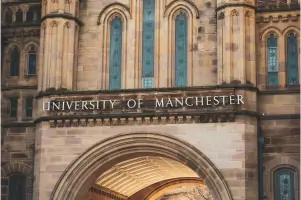
Established in 2000, we have pioneered innovative solutions for microbiological oilfield reservoir souring and industrial leak recovery. Our expertise in microbial souring forecasting and simulation empowers energy companies to make informed, cost-effective decisions. Through decades of research and collaboration with leading academic institutions, we have developed proprietary technologies like M3 Molten Metal Manipulation, revolutionising leak-sealing in extreme environments. Our work spans nuclear decommissioning, carbon capture storage, and hydraulically fractured shales, addressing critical environmental challenges. With a team of seasoned professionals, we deliver tailored solutions that combine scientific rigour with practical application.Our partnerships with The University of Manchester and Lancaster University underscore our commitment to advancing sustainable technologies. Recognised for our contributions to well integrity and geomicrobiology, we continue to lead the industry in innovation. Our global client base trusts us to mitigate risks and optimise operational efficiency. From offshore oilfields to power transmission systems, our technologies prevent leaks and enhance safety. Backed by rigorous scientific research and real-world application, we remain at the forefront of environmental engineering solutions.

Services
Microbiological Oilfield Souring
Souring Forecasting Modelling
Metal Seals for Leak Recovery
Carbon Capture Storage
Hydraulically Fractured Shales Analysis
M3 Molten Metal Manipulation
Nuclear Decommissioning Support
SF6 Leak Prevention
Transformer Oil Leak Sealing
Remote Leak Recovery
Details
- Year established: 2000
Highlights and features
- We have over 20 years of experience in microbiological oilfield reservoir souring solutions.
- Our patented M3 Molten Metal Manipulation technology revolutionises leak-sealing in extreme environments.
- We collaborate with The University of Manchester on cutting-edge carbon capture storage research.
- Our team includes experts with decades of experience in nuclear decommissioning applications.
- We deliver cost-effective treatment strategies validated by rigorous high-pressure bioreactor studies.
Services
Microbiological Oilfield Souring
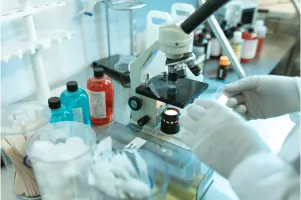
Our forecasting models predict hydrogen sulfide generation risks in oil reservoirs. Using high-pressure bioreactors, we simulate downhole conditions to develop treatment strategies. This prevents corrosion and safety hazards during secondary oil recovery operations.
M3 Molten Metal Manipulation
This technology uses low-melting-point alloys for instant leak recovery in pipelines and industrial equipment. Our M3Spray and M3CollarCast methods create permanent seals without welding. Ideal for nuclear decommissioning and SF6 gas leak prevention in power transmission.
Carbon Capture Storage
We study microbial impacts on CO2 storage integrity through simulated underground environments. Our research develops mitigation tools for long-term carbon sequestration. Collaborating with universities, we support the UK's net-zero targets through safe storage solutions.
Hydraulically Fractured Shales
Our research examines microbial communities in fractured shale environments. We assess how pressure, temperature, and geochemistry affect gas yields. This understanding helps optimise hydraulic fracturing processes and prevent microbial-related production issues.
Nuclear Decommissioning Support
We provide leak-sealing solutions for nuclear facility decommissioning projects. Our reversible alloy seals prevent radioactive material leaks without generating secondary waste. Remote application techniques ensure safety in high-radiation environments.
People
Professor Bob Eden
Founder and Managing Director
Inventor of the Bismuth Plug with 30 years' experience in bismuth alloy seals. Former UMIST researcher in subsea engineering and oilfield souring. Appointed Honorary Professor at The University of Manchester in 2019.
Matt Streets
Head of Division Scientific
Senior microbiologist specialising in oilfield biofouling. Regular industry speaker on souring remediation and forecasting models. Develops cost-effective treatment strategies for global energy clients.
Kat Lennox
Managing Director
Leads M3 technology development for nuclear decommissioning applications. Former key account director at National Nuclear Laboratory. Brings sector-specific expertise to leak-sealing solutions for power distribution systems.
Nicola Seferta
Project & Operations Manager
Specialist in quality production systems with metallurgy expertise. Oversees SF6 leak sealing projects and remote recovery challenges. Former logistics manager in exhaust systems manufacturing.
Mags McCreedy
Project and Health & Safety Manager
25-year project management veteran with experience in pharmaceuticals and energy sectors. Ensures safe implementation of M3 leak-sealing projects. Focuses on environmental problem-solving through innovative technologies.
Questions
What is microbiological oilfield reservoir souring?
It's a process where sulfate-reducing bacteria produce hydrogen sulfide in oil reservoirs, causing corrosion and safety risks during extraction.
How does M3 Molten Metal Manipulation work?
Our low-melting-point alloy seals rapidly fill leaks in pipelines and structures, creating permanent metal-to-metal seals without hot work.
What industries benefit from your leak-sealing technology?
We serve energy sectors including oil & gas, nuclear power, and electricity transmission for SF6 and transformer oil leak prevention.
How do you forecast reservoir souring risks?
We use predictive modelling and high-pressure bioreactor studies to assess microbial activity under reservoir conditions.
What carbon capture storage research do you conduct?
Our CCS R&D hub studies subsurface microbiology to develop mitigation strategies for CO2 storage integrity.